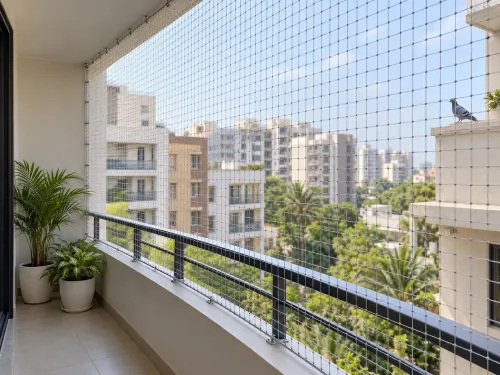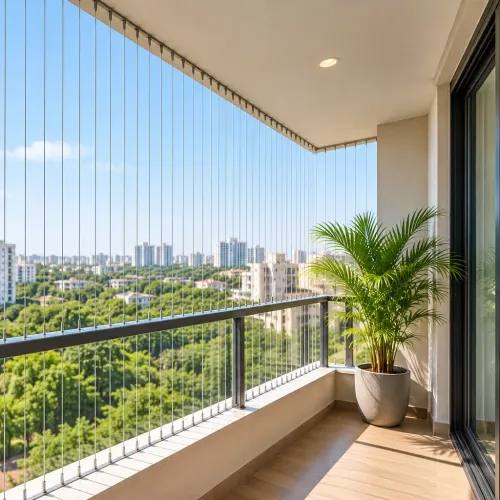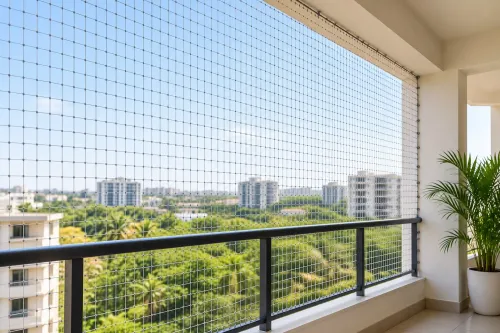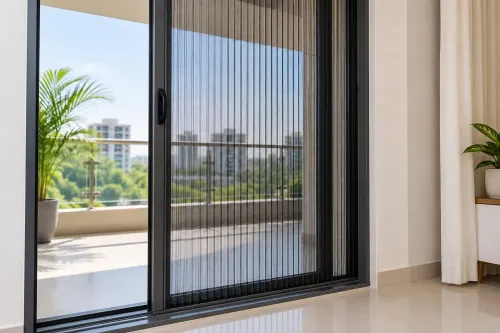

A balcony or open window becomes more dangerous when a child can reach its edge, climb beside it, or push through an opening. You will learn how to assess a child-safety grill’s actual barrier function, choose safer openings, check the installation, preserve emergency escape access, and combine the grill with everyday controls.
Key takeaways
- Keep grill openings too narrow for a child’s head to pass through.
- Fix the barrier into sound structural surfaces, not only window frames.
- Leave an emergency escape route that adults can reach and operate.
- Inspect fixings, corrosion, gaps, and damage on a regular schedule.
What a Child-Safety Grill Actually Prevents
A child-safety grill creates a physical boundary between a child and the drop or open sash: it spans the balcony opening or window area so a child cannot simply walk, crawl, or lean through to the edge.
That is the core balcony safety for children benefit, but it reduces fall risk rather than guaranteeing that a determined child cannot climb or squeeze through.
For an open window, the window fall prevention effect comes from limiting the usable opening or placing a securely anchored barrier across it. An insect screen does not perform that job; its mesh and frame can pull out when a child leans on them.
The invisible grill safety function is more specific than “invisible”: its cables or members must remain secure, correctly spaced, and attached to the building structure.
A barrier can create a new danger if it encloses a balcony door, sliding window, or service opening without a usable release or rescue arrangement. Check that the full opening remains part of the plan, including the door, adjoining windows, and any escape route.
Keep furniture, plant stands, boxes, and play equipment away from the barrier; a climbing step can defeat a well-fixed grill. Do not treat an advertised invisible grill as an automatic building-code guard: local rules still govern guard height, loads, openings, and secure handrails.
Choose Openings and Layouts for Toddlers
Keep every opening below 100 mm, commonly described as the 4-inch opening rule, so a toddler cannot pass through it. Treat that measurement as a screening limit, not a complete specification: check the gaps around the perimeter, beside the window sash, below the bottom rail, and around brackets after the window opens and closes.
| Layout | Safer choice | Risk to check |
|---|---|---|
| Vertical members | Closely spaced vertical bars or cables with no opening over 100 mm | A wide edge gap can defeat the measured spacing |
| Horizontal members | Avoid footholds that let a child climb toward the edge | Horizontal rods or cables can be easier to climb |
| Balcony door or window | Keep the barrier clear of the opening path and provide a usable release or rescue arrangement | Enclosing the only escape route can trap a child |
| Adjacent openings | Treat doors, service openings, and nearby windows as one connected layout | A child may move around the barrier instead of through it |
For toddler balcony safety, measure cable spacing versus gap width after installation; the distance between cables does not reveal openings at corners, sills, or wall joints. Ask which local code and test method applies, because a 4-inch limit used in one jurisdiction does not automatically approve every grill design.
Move chairs, plant stands, storage boxes, and play equipment away from the barrier. Keep enough clear floor space that a child cannot use one object as a step to reach the grill, latch, or window handle.
Check the Structure, Fixings, and Whole Barrier
A grill is securely installed only when its loads reach the building structure, not a surface that merely feels solid. Check that the installer identified the substrate behind the finish and matched the fixings to it: masonry and concrete anchors differ from fixings for steel or timber.
Plaster, mosquito-screen frames, window trim, and lightweight cladding cannot substitute for structural support.
Inspect the whole barrier, not just the main frame:
- Examine the grill anchor points for movement, cracked surrounding material, failed sealant, or fasteners pulling away from the wall.
- Press each frame section and corner joint, then check the wall and sill strength around every fixing.
- Inspect cables or rods for bending, corrosion, fraying, loose terminals, and incorrect cable tension.
- Measure gaps at the sides and bottom after installation; a gap that appears small at the centre can widen near a corner.
- Look for cracked welds, bent members, and openings created by a damaged or shifted section.
A hand shake is not a safety test. Ask for the named local code or test standard, the member and anchor specification, and a post-installation tension or security check. Horizontal cables can also provide footholds, so confirm the design meets the local code’s climbability provisions.
Recheck the barrier after heavy rain, cleaning, building movement, or repeated use. Keep furniture, plant stands, storage boxes, and play equipment away from it; these create climbing steps but do not repair weak fixings or poor wall and sill strength.
Compare Barriers Without Blocking Escape
Choose the barrier by the opening’s job, not by appearance. An invisible grill versus metal grill comparison must include climbing, impact, maintenance, and emergency egress. A balcony guard also has to resist a person leaning or falling against it; cable spacing alone does not prove that it meets local building-code requirements.
| Option | What it does well | Main limitation |
|---|---|---|
| Invisible grill | Preserves light and sightlines while restricting access | Cable tension, terminals, corrosion, and anchors need inspection; a fixed system can obstruct rescue |
| Metal grill | Provides a rigid, visible barrier with predictable impact resistance | Can create footholds, obstruct cleaning, and block an escape window |
| Laminated safety glass | Keeps broken pieces attached to its interlayer and maintains a visual barrier | Needs engineered framing; it is not automatically a child barrier or balcony guard |
| Window guard | Physically prevents a child passing through an open window | Must have an adult-operable release where the window serves emergency egress |
| Window restrictor | Limits sash opening without covering the whole window | A child can defeat or damage it; check release operation and window compatibility |
| Removable barrier | Allows adults to clear a doorway or opening quickly | Removal, poor refitting, or a missing latch defeats protection |
Treat an escape opening differently from an ordinary balcony panel. A release must be reachable by an adult, operable without a key or special knowledge, and clear of curtains and furniture. Ask UNIFIRST SALES AND SERVICES to document the cable specification, anchor points, spacing, security check, and how the escape route remains usable.
Related product
 | INVISIBLE GRILL ₹160 Description Invisible grills are the modern replacement for traditional iron grills. View product → |
Build the Grill into Daily Supervision and Maintenance
Adults still need to control access every day. Keep balcony door locks engaged when the balcony is not in use, fit window opening limiters to windows a child can reach, and ensure an adult can release them during an emergency. A grill reduces access; it does not supervise a child or replace an escape plan.
Use this routine:
- Keep furniture away from railings, including chairs, plant stands, storage boxes, and play equipment. A climbing step beside the barrier can defeat its intended height.
- Run the 4-inch opening test after installation and after repairs. Check gaps between members, at the sides, below the bottom rail, beside a window sash, and around brackets.
- Open and close each window, then repeat the gap check. A sash can create a larger passage when it moves.
- Arrange a grill maintenance inspection at regular intervals and after storms, impact, renovation, or unusual cable movement. Look for loose anchors, slack or damaged cables, corrosion, cracked frames, and separating joints.
Keep curtains and furniture clear of any escape window. A permanently fixed grill across a bedroom’s only exit can delay evacuation or firefighter rescue. If the opening needs a guard, its adult release must work without a key or special knowledge and remain reachable; local fire and building rules determine the exact arrangement.
Never lock a child inside a balcony or behind a sliding window without a usable release route.
Frequently asked questions
What does a child-safety grill prevent?
It creates a physical boundary that stops a child from walking, crawling, or leaning through a balcony opening or open window sash toward a drop.
How should you choose grill openings for toddlers?
Choose openings that prevent a child’s head and body from passing through, and avoid layouts that provide footholds for climbing.
What should you check before installing a safety grill?
Check the surrounding concrete, masonry, sill, frame, fixings, welds, gaps, and the barrier’s full perimeter. A secure grill depends on the complete assembly.
How can a safety grill preserve emergency escape?
Keep at least one planned escape route clear, ensure adults can reach it, and confirm that any opening mechanism is simple to operate during an emergency.