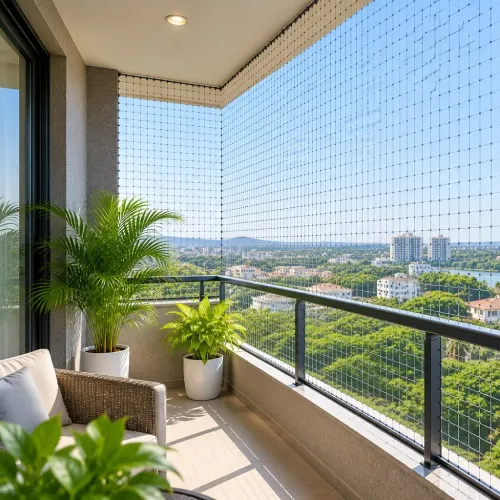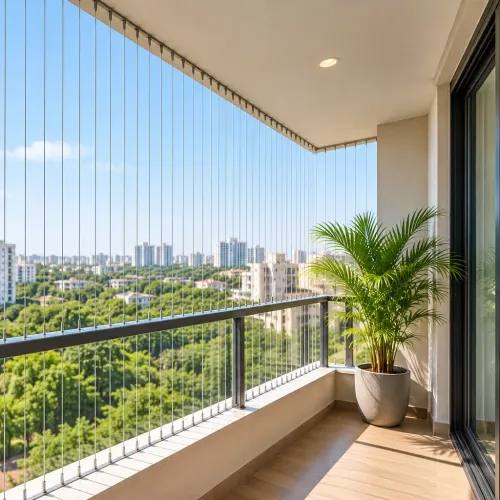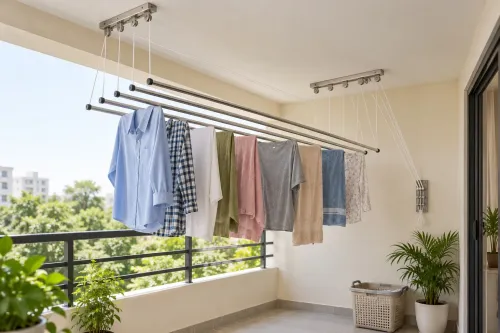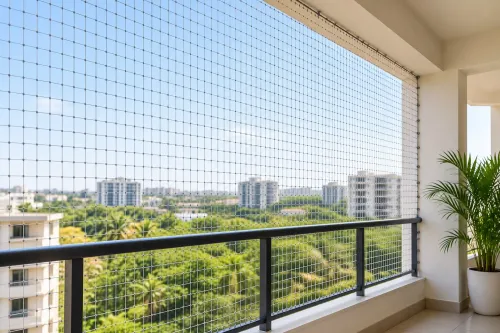
The right Kabootar Net Jali depends on the smallest bird you need to exclude, the opening’s shape, and how often you must use the space. By the end, you will be able to compare mesh and colour, calculate the enclosure, specify access points, and check whether the finished installation is secure and practical.
Key takeaways
- Use 19 mm mesh or smaller to exclude sparrows and mynas.
- Choose black netting for lower visual distraction and easier concealment.
- Measure every opening and plan a usable access point before installation.
- Inspect anchors, tension and gaps after the enclosure is fitted.
Match the mesh and material to the birds you need to exclude
Choose the mesh opening for the smallest bird you need to exclude. A 40 mm or 50 mm Kabootar Net Jali can stop pigeons and crows, but sparrows can pass through it. For mixed bird problems, use openings of about 19 mm or smaller; this also blocks mynas and other small birds.
| Bird or location | Mesh choice | Material and use |
|---|---|---|
| Pigeons on a balcony or terrace | 40–50 mm | UV-stabilised HDPE, such as Garware Bird Net, for exposed areas |
| Crows and pigeons around terraces | 35–40 mm | Strong UV-stabilised HDPE; anchor the edges firmly |
| Sparrows, mynas and mixed small birds | 19 mm or smaller | Fine mesh; check that the smaller opening does not restrict required ventilation |
| Ducts and shafts | 19–40 mm, based on the smallest bird present | Choose UV-stabilised material where sunlight reaches the opening |
For exposed balconies and terraces, prefer UV-stabilised polyethylene or polypropylene over unprotected twine. Ask for the material, UV treatment and stated replacement or warranty period. Nylon Bird Net made from transparent mono-filament can suit a low-visibility installation, but compare its outdoor UV specification before choosing it.
The practical choice in HDPE netting versus nylon mono-filament netting is durability against visibility. HDPE Garware netting suits sun-exposed balconies, terraces and shafts; transparent nylon can look less noticeable but needs careful inspection for UV ageing, broken strands and loose edges.
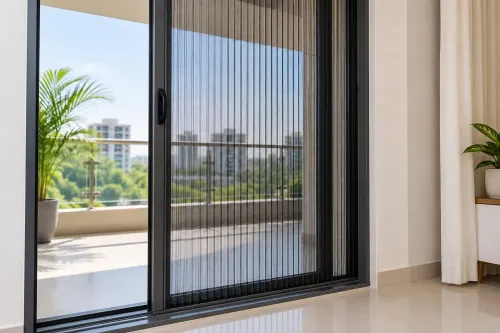
Neither bird netting stops mosquitoes or flies, so use a separate insect-screen system for that job.
Choose black or white netting for visibility and upkeep
Black bird netting usually gives the clearest view from inside because dark strands create less glare against bright sky than pale strands. From outside, it tends to recede into the balcony opening, preserving a less noticeable balcony appearance.
| Net colour | View and outside appearance | Glare and heat perception | Dirt and damage detection |
|---|---|---|---|
| Black | Least distracting from inside; blends into shadows and the building exterior | Low reflected glare; may look and feel visually hotter in strong sun, without proving a large indoor temperature increase | Dust and pale droppings stand out; small dark cuts can be harder to spot |
| White | More visible through the opening and more prominent from the street | Reflects more light, which can create glare; looks visually cooler and brighter | Dirt, stains and broken strands are easier to notice |
| Transparent | Least noticeable in a straight-on view; can still alter the balcony appearance | UV light, water droplets, dust and oblique sunlight make strands conspicuous | Fine damage is harder to inspect against a bright background |
Choose black bird netting when an open view and subdued exterior appearance matter most. Choose white bird netting when frequent visual inspection matters more than concealment, or when it matches the building finish.
A transparent bird net is not optically invisible. Inspect any colour from both sides after installation, especially at corners and around fixing points, because glare can hide a loose strand while dirt can make an otherwise discreet net obvious.
Measure the opening and plan access before sealing it
Measure the opening at its actual edges, not from one railing post to another. Record width and height at several points, then sketch projecting slabs, irregular corners, drainpipes, air-conditioner brackets, ledges and wall gaps. This balcony net measurement prevents a neat-looking rectangle from leaving an entry route.
1. Inspect the space before measuring. Confirm that no live pigeon, egg or active nest is inside; sealing an occupied balcony can trap birds and disturbing a nest can breach local wildlife rules.
2. Mark every access point on the sketch: sliding doors, windows, clotheslines, drainage outlets, AC units and emergency escape routes. Measure the clearance needed to operate, clean or service each one.
3. Choose a full enclosure when birds can enter from the front, sides, ceiling or below the slab. The net must continue around corners and fittings; covering only the balcony front leaves gaps near pipes and brackets.
4. Choose a partial barrier when one opening is the confirmed entry route and the remaining area must stay accessible. Recheck the design from a pigeon’s viewpoint so the barrier does not simply redirect birds around an unprotected edge.
5. Specify a removable bird net or openable panel where equipment or escape access is routine. Secure it closed so its fastened position leaves no pigeon-sized gap.
Use the same approach for a bird net for ducts and shafts, allowing for inspection access. A terrace bird net needs a plan for drains, tanks and service routes. Bird netting is not fall protection or mosquito screening; use separate systems for those hazards.
Specify the fixing system and inspect the completed enclosure
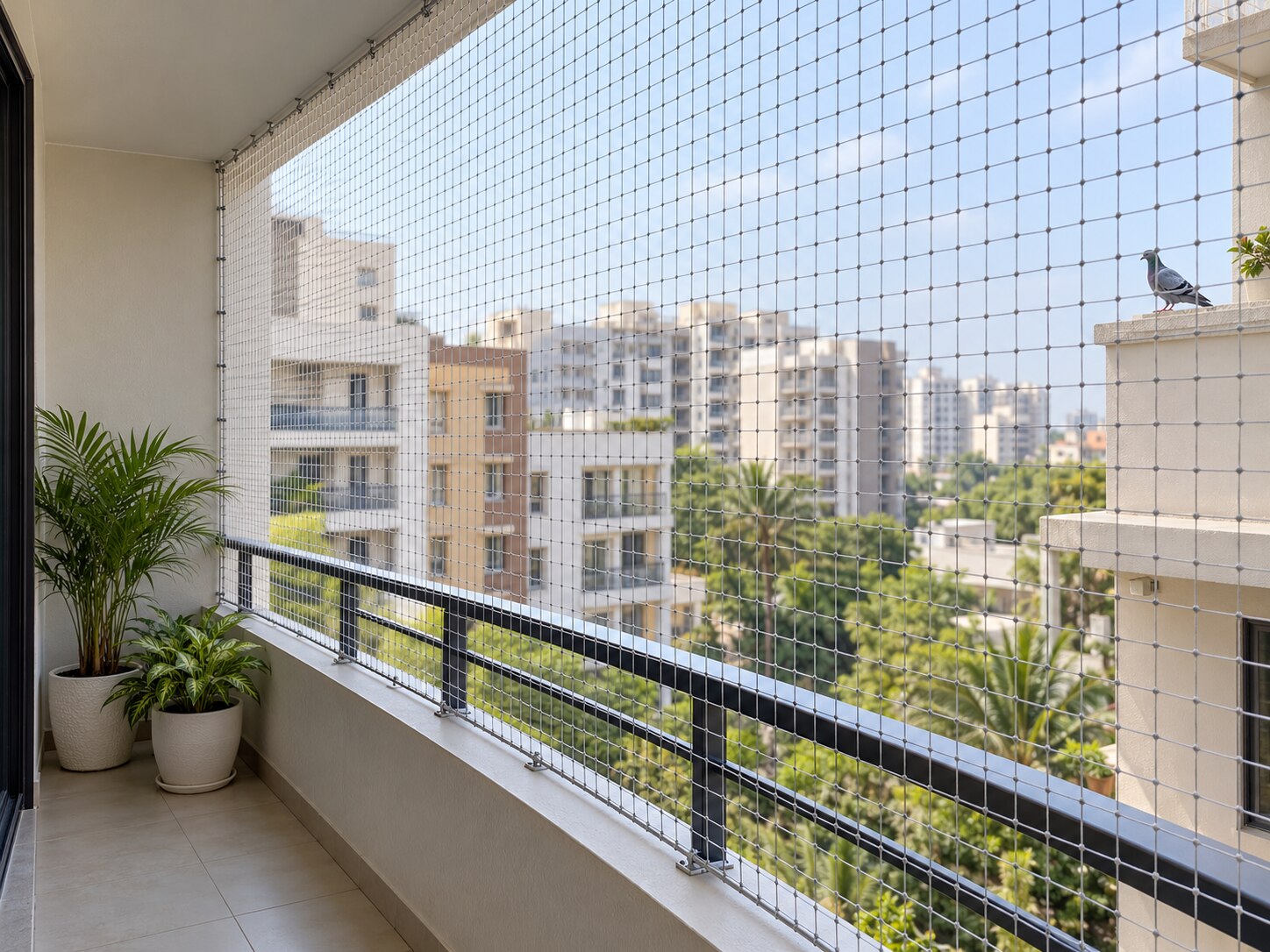
A properly mounted enclosure is continuous, taut and fixed to a perimeter rope or wire, with anchor points selected for the substrate and wind exposure. Include a corner fixing at every change of direction; do not rely on adhesive or a few isolated hooks.
Concrete, brick, stone, aluminium, rendered masonry and hollow brick require different fixing methods, so ask the installer to identify the substrate before choosing anchors.
Inspect the completed bird net installation using this checklist:
- Trace every edge, including balcony corners, the underside of slabs, drainpipes, air-conditioner brackets and wall junctions. No opening should admit a pigeon.
- Press the net lightly between anchor points. Excessive sag, loose edges or flapping sections indicate poor tension and can create perches or entanglement points.
- Check each anchor for movement, cracked plaster, pulled-out plugs and gaps around the fixing. Adhesive that has lifted is not a secure repair.
- Open and close every window and door repeatedly. Confirm that handles, tracks, clotheslines, drainage outlets, air-conditioning access and emergency escape routes remain usable.
- Test any removable or openable section. It must close securely without leaving a pigeon-sized gap.
- Before sealing the space, look for live birds, eggs and active nests. Wait for birds to leave and follow local wildlife rules before closing their route.
UNIFIRST SALES AND SERVICES can be given this inspection brief so the fixing method, access section and final gap check are recorded rather than judged from the balcony floor. A bird net is not a fall-protection guard; retain tested railings and child-safety systems.
Related products
 | BIRD NET Bird netting or anti bird netting is a form of bird pest control. It is a net used to prevent birds from reaching certain areas. View product → |
 | BIRD NET Material Composition / Types > Mono Filament Net > Transparent > 35 mm > 3 years warranty Fittings > Hooks > Rope Wire > Tie View product → |
Keep the enclosure safe, clean and suited to its actual job
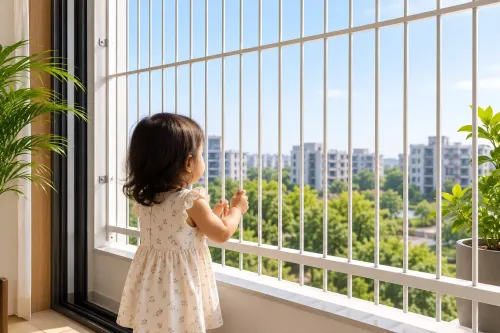
A pigeon net is not a guardrail, child-safety barrier or fall-protection system. Bird exclusion net safety requires a separately tested railing or guard wherever a person could lean, climb or fall; ordinary netting can tear, detach or trap a child.
Treat mosquito screen versus bird net as a function check: bird netting blocks birds but will not stop mosquitoes, flies or tiny insects. If you need both protections, install separate systems or a combination designed for both.
Bird spikes versus netting also solves different problems: spikes protect narrow ledges, while netting blocks the flight space of a balcony or shaft.
Inspect the enclosure after storms, building work and cleaning. Check these points:
- Look for torn strands, loose anchors, sagging sections and pigeon-sized gaps.
- Confirm that doors, windows, clotheslines, air-conditioners, drains and emergency exits remain usable.
- Keep an access flap closed and secured whenever nobody is using it.
- Remove leaves and trapped feathers before they block drainage.
- For pigeon droppings cleaning, wet the deposits first, wear gloves and avoid dry sweeping that creates dusty particles; wash your hands afterwards.
- Replace damaged netting instead of knotting a weak patch beside a fixing point.
- Keep sharp wire, exposed cable ties and unused hooks away from reach.
Do not attach planters, laundry loads or other weight to the net unless the system was specifically designed and tested for that load.
Frequently asked questions
What mesh size excludes pigeons, crows, sparrows and mynas?
A 40 mm or 50 mm mesh can stop pigeons and crows, but sparrows can pass through. Use about 19 mm mesh or smaller for mixed bird problems, including sparrows and mynas.
Should you choose black or white Kabootar Net Jali?
Choose black netting when you want lower visual distraction and easier concealment against darker backgrounds. White netting suits light façades but shows dust more clearly.
What should you measure before installing balcony bird netting?
Measure the full width, height and depth of the opening, including side gaps, projections and drainage areas. Plan access for cleaning, maintenance and emergencies before sealing the enclosure.
How do you inspect a completed bird-net enclosure?
Check that the net is taut, anchors are secure, edges are sealed and no gap is large enough for the target bird. Confirm that doors, windows, drains and escape routes remain usable.